
Do Diet and Fitness Tracking Apps Help… or Harm?
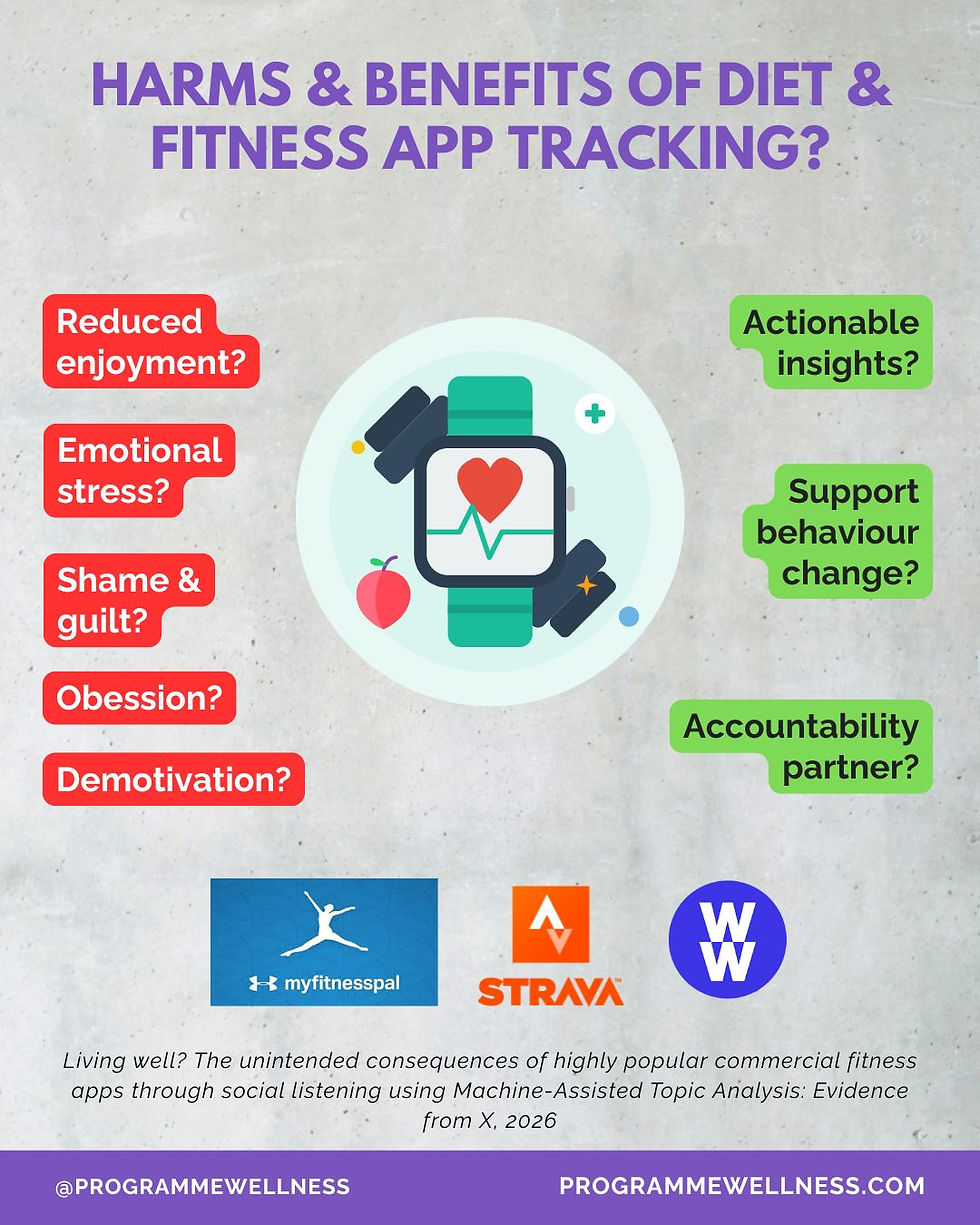
A new study explored what people were really saying online about commercial fitness tracking apps.
And the signal was surprisingly clear:
For many users, these apps felt more punishing than empowering.
📱 Diet and Fitness Tracking Apps Under the Microscope
Researchers used social listening analysis on X (formerly Twitter) to examine conversations around the five most profitable commercial fitness apps.
In total:
58,881 posts were collected
13,799 negative posts were analysed in depth
Most mentions involved MyFitnessPal, Strava, and WW (formerly Weight Watchers)
🧩 What Were People Actually Complaining About?
Several themes appeared repeatedly.
😒 Relentless Quantification
Many users felt exhausted by constantly measuring:
Calories
Macros
Steps
Workouts
Streaks
Goals
Health became something to “perform” rather than experience.
😞 Emotional Toll
People described:
Guilt after missed goals
Shame around food choices
Anxiety over streaks
Frustration with inconsistency
Obsessive behaviours
Loss of motivation
For some, the app became a source of stress rather than support.
🍽️ Losing Enjoyment of Food & Exercise
One of the saddest themes?
People losing enjoyment in the very behaviours the apps were supposed to help support.
Exercise became punishment.
Food became numbers.
Progress became emotionally tied to app feedback.
🩺 Are There Any Benefits to Diet and Fitness Tracking Apps?
Absolutely.
As a practitioner, I do recommend tracking apps for some clients, some of the time.
In the right context, they can be genuinely useful.
✅ Potential Benefits
Providing actionable insights unavailable without tracking
Increasing awareness around habits and patterns
Reinforcing positive behaviours
Supporting accountability and consistency
Helping identify nutritional gaps or excesses
For example:
👉 “I didn’t realise how little protein I was eating.”
👉 “I didn’t realise I snack every evening while stressed.”
👉 “Seeing my glucose improve after walks motivates me to continue.”
Used well, these tools can create valuable feedback loops.
⚠️ But The Risks Matter Too
If I see risk of the following, I generally avoid recommending tracking:
❌ Potential Downsides
Disordered eating tendencies
Perfectionism
Shame-based self-talk
Obsessive behaviours
Dogmatic rigidity
Damaged relationship with food or exercise
Because health tools should support wellbeing…
Not undermine it.
🛠️ Practical Takeaway
Diet and fitness tracking apps are just that:
Tools.
And like any tool, value depends on:
The person using it
The context
The intention behind it
The psychological impact it creates
For many people, flexibility, self-awareness, and sustainability matter far more than perfect streaks or flawless tracking.
💡 Bottom Line
The best health behaviours are the ones you can sustain without feeling controlled by them.
Tracking can support that.
But for some people?
Tracking slowly becomes the problem itself.
🔎 What positives or negatives have you experienced with diet or fitness tracking apps?
My clients enjoy clear, specific, actionable guidance on how to use diet, supplementation, lifestyle and functional testing to reach their personal health goals and resolve their health issues.
Why not book a free health kickstart call to find out how we would enable better health for you? 📲


Comments